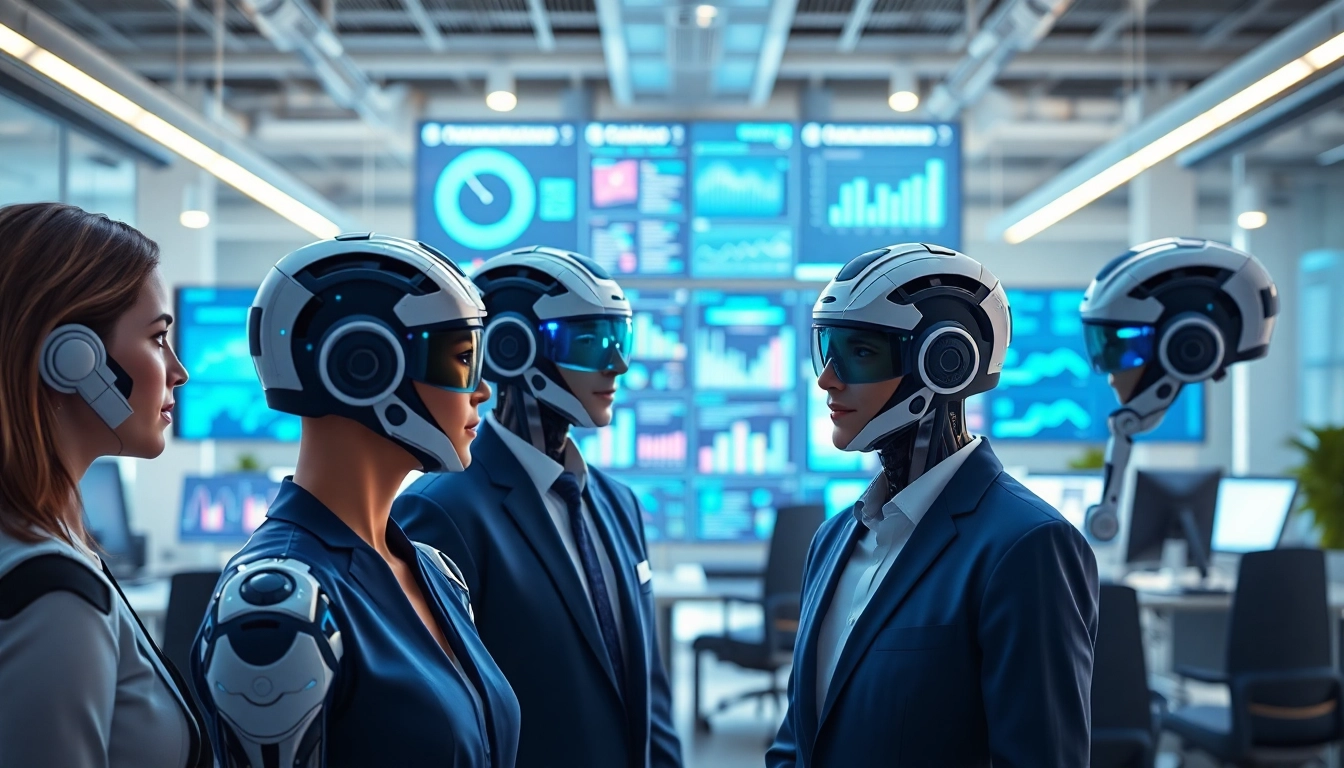
What are Ai Agents?
As the landscape of artificial intelligence evolves, the concept of Ai agents has become increasingly prominent. These autonomous entities are designed to perform tasks, make decisions, and interact with their surroundings without human intervention. They perceive their environment, act according to pre-defined goals, and continuously improve through learning algorithms. The following sections delve into the definition, key features, and types of Ai agents, highlighting their unique capabilities and potential applications.
Defining Ai Agents
An Ai agent is essentially any software that autonomously executes tasks using artificial intelligence. According to general terminology, an intelligent agent represents an entity that perceives its environment, acts upon it, and can modify future interactions based on past experiences. This capability distinguishes Ai agents from typical software, enabling them to adapt their responses according to the context of their operations.
Key Features of Ai Agents
- Autonomy: Ai agents can operate independently, making decisions based on their programming and input data without requiring continuous human oversight.
- Adaptability: These agents can improve their performance over time through machine learning, adjusting to new circumstances and data inputs.
- Integration: Ai agents can incorporate various tools and applications, enabling them to execute complex workflows efficiently.
- Interactivity: They can engage with users, other agents, and systems to gather information, provide feedback, and coordinate actions.
- Scalability: As demand increases, Ai agents can scale operations without a proportional increase in overhead, making them ideal for dynamic environments.
Types of Ai Agents
A diverse array of Ai agents exists, each tailored to meet specific needs and function in different contexts. The primary types include:
- Reactive Agents: These agents respond to stimuli without any memory or learning capabilities. Their actions are purely reactive based on current inputs.
- Deliberative Agents: These incorporate internal models of their environment and can plan actions based on past experiences and future predictions.
- Learning Agents: These improve their performance by learning from past actions, utilizing machine learning techniques to adapt their strategies.
- Collaborative Agents: These can work alongside other agents or humans, sharing information and coordinating tasks to achieve common goals.
How Ai Agents Operate
The operational mechanisms of Ai agents are fundamental to their effectiveness. Understanding how these entities function sheds light on their potential applications and implications for various industries.
Autonomous Decision-Making
At the heart of Ai agents is their ability to make decisions autonomously. Using algorithms and models, they analyze data inputs, assess possible actions, and determine the most effective course. This decision-making process can encompass simple choices, such as selecting an answer in a chatbot, or complex scenarios where multiple variables and potential outcomes must be considered.
Data Processing Capabilities
Data processing is a crucial component of how Ai agents function. These agents can handle vast amounts of information, from structured databases to unstructured data sources like social media and web content. By employing natural language processing (NLP) and machine learning techniques, they can extract valuable insights, recognize patterns, and deliver informed recommendations.
Interaction with Users
A salient feature of Ai agents is their ability to interact with users effectively. Platforms using these agents often integrate NLP to understand user queries and respond appropriately. This capability enhances user experience, making it seem as though they are engaging in conversation with a human rather than a machine.
Applications of Ai Agents in Business
The practical applications of Ai agents span numerous industries and processes, catalyzing a transformation in how businesses operate.
Service Automation
One of the principal uses of Ai agents is in service automation. They can handle routine inquiries and tasks, such as scheduling appointments or responding to customer queries. This automation not only increases efficiency but also enables human employees to focus on more strategic activities that require personal insight and creativity.
Data Analysis and Insights
Ai agents excel in sifting through large datasets to identify patterns and trends. Businesses can leverage these insights to refine marketing strategies, optimize operations, and improve customer engagement. For example, an Ai agent analyzing purchasing patterns can help retailers make data-driven decisions about inventory and promotions.
Enhancing Customer Experience
With Ai agents, businesses can deliver personalized experiences to customers. By analyzing user data and preferences, Ai agents can tailor recommendations and offers, responding to individual client needs efficiently. This personalized approach enhances customer satisfaction and fosters loyalty.
Challenges of Implementing Ai Agents
Despite their numerous benefits, implementing Ai agents comes with several challenges that businesses must navigate.
Addressing Technical Limitations
Technical limitations can hinder the deployment of Ai agents. Organizations may face issues related to system compatibility, integration with existing software, and the need for high-quality data inputs to train agents effectively. Addressing these challenges involves investing in technology and selecting platforms that support seamless integration.
Ensuring Data Privacy
With the rise of Ai agents, the importance of data privacy and security cannot be overstated. Businesses must implement robust protocols to protect sensitive information and comply with regulations. This involves encrypting data, ensuring secure data transfers, and being transparent about data usage, fostering trust with users.
Managing User Trust
For Ai agents to be effective, users must trust them. This trust can be built through providing clear information on how the agents function, their decision-making processes, and the measures taken to protect user data. Training users to interact with Ai agents confidently is equally critical to ensuring trust and satisfaction.
The Future of Ai Agents
The future of Ai agents appears promising, with ongoing advancements shaping their role in our lives.
Advancements in Technology
Technological advancements will continue to enhance the capabilities of Ai agents. Improvements in machine learning algorithms and NLP will result in more sophisticated agents capable of understanding and processing information contextually. This will facilitate deeper interactions and support more complex decision-making scenarios.
Integration with Other Technologies
The integration of Ai agents with emerging technologies such as blockchain and IoT will expand their functionalities. For example, leveraging IoT data will enable Ai agents to make real-time decisions that consider current environmental conditions and user behavior, resulting in more accurate and efficient operations.
Long-term Effects on the Workforce
As Ai agents become more prevalent, their impact on the workforce will be significant. While some routine jobs may become obsolete, new opportunities will arise in areas such as Ai oversight, data analysis, and the development of ethical standards for AI. Embracing a transformative mindset will prepare workers to adapt and thrive in an increasingly automated world.
Frequently Asked Questions about Ai Agents
What does an Ai agent do?
An Ai agent performs tasks autonomously, processes information, and can learn from past experiences, optimizing its operations over time.
Can Ai agents make decisions?
Yes, Ai agents can make autonomous decisions based on data inputs and their algorithms, enabling effective actions without human intervention.
What are the benefits of using Ai agents in business?
Ai agents enhance efficiency, improve customer experiences, streamline processes, and provide valuable data insights, ultimately driving business growth.
How do Ai agents learn?
Ai agents learn through machine learning techniques, analyzing past interactions and outcomes to refine their decision-making and improve performance.
Are Ai agents secure?
While Ai agents can manage data efficiently, ensuring their security requires implementing robust data protection measures and compliance with privacy regulations.