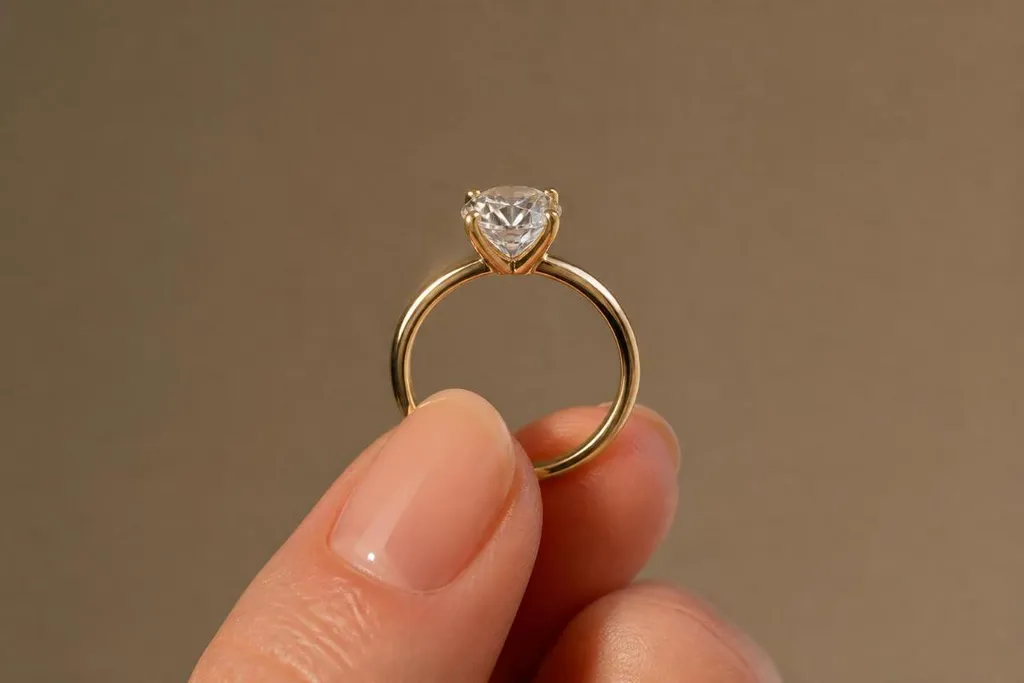
Some of the most effective changes to an engagement ring are measured in millimetres. Prongs may be primarily functional, securing the centre stone within its setting, but their shape also affects how the diamond or gemstone appears from above. Rounded claws can create a softer frame, while finely finished pointed prongs introduce sharper lines and a more precise silhouette. The difference is subtle, yet on a carefully proportioned ring it can noticeably influence the overall character.
For someone refining the details of an engagement ring, this upgrade offers a way to introduce pointed prongs without changing the fundamental design of the piece. It is particularly relevant when the centre stone has a distinctive shape, because the prongs become part of the visual boundary between the gemstone and its setting.
Why Prong Shape Matters
The primary purpose of a prong is structural. Small sections of metal extend over the edge of the centre stone, helping keep it securely positioned within the setting.
Because those prongs are visible, however, their finishing influences the appearance of the ring. A broad or rounded claw creates a different impression from one that narrows towards a defined point.
Pointed prongs tend to look more precise. Rather than ending in a visibly rounded bead of metal, they taper towards the gemstone, helping the setting feel finely detailed.
This can be especially attractive in a solitaire, where there are relatively few decorative elements competing for attention. With no halo or elaborate shoulders to dominate the design, details such as prong shape become easier to notice.
The change does not necessarily make the ring more elaborate. In many cases, it can make the setting appear cleaner because the metal around the centre stone feels more deliberately shaped.
How Pointed Prongs Complement Different Stone Shapes
Not every centre stone interacts with its prongs in the same way.
On an oval or round diamond, pointed claws introduce a subtle geometric contrast against the curved outline. This can give a classic shape a slightly sharper, more contemporary finish.
Angular stones can benefit in another way. Emerald, radiant and princess cuts have defined corners and straight lines, so carefully shaped prongs can complement their geometry rather than visually softening it.
Pear and marquise shapes require particularly thoughtful setting design because their pointed ends are important parts of their silhouettes. The positioning and form of the securing metal need to balance aesthetics with protection.
The size of the centre stone also changes how noticeable the prongs become. Someone choosing a 2-carat diamond, for example, may prefer pointed prongs because the larger face-up area makes fine setting details easier to appreciate. The decision is therefore not simply about making a large diamond appear larger; it is about ensuring the setting feels appropriately refined around a more prominent centre.
Metal Colour Changes the Effect
Pointed prongs do not exist visually in isolation. Their appearance is influenced by the colour of the metal used around the stone.
White gold or platinum can blend closely with a colourless diamond. From normal viewing distance, fine pointed claws may appear relatively discreet, allowing the outline of the stone to remain dominant.
Yellow or rose gold creates greater contrast. The prongs can become a more visible part of the design, particularly around a bright colourless centre stone. Some settings use contrasting metal strategically, while others maintain one metal throughout for a more unified appearance.
This is worth considering when customising a ring. If the goal is for pointed prongs to virtually disappear around the diamond, a white metal may support that effect. If the wearer appreciates visible craftsmanship and warm metal details, yellow or rose tones can give the claws greater definition.
Neither approach is inherently superior; they simply create different visual results.
Practical Considerations and Long-Term Care
Although prong shape influences style, security remains the priority. The setting must be appropriate for the centre stone and constructed so that the gemstone is held correctly.
Prongs are also among the parts of a ring that deserve periodic inspection. They can experience contact with clothing, surfaces and everyday objects, and gradual wear may be difficult to notice without close examination.
A professional jeweller can check whether the claws remain secure and whether any maintenance is required. This is particularly sensible for an engagement ring worn every day.
Careful habits help too. Removing fine jewellery during heavy manual work, exercise or activities involving repeated impact reduces unnecessary stress on both the prongs and the centre stone.
The goal is to preserve the fine appearance of the pointed finish without forgetting its essential structural role.
Final Thought
Pointed prongs demonstrate how a seemingly minor adjustment can influence an engagement ring's entire silhouette. They can make a setting feel more precise, complement the geometry of a chosen stone and reduce the visual heaviness of the metal surrounding it.
For someone who has already chosen the centre stone, metal and overall setting, refining the prongs is an opportunity to consider the ring at a more detailed level. It is a small design decision, but in fine jewellery, those small decisions are often what make the finished piece feel truly considered.